Too Good to Be True: Red Flags in Used Car Listings
November 23, 2026
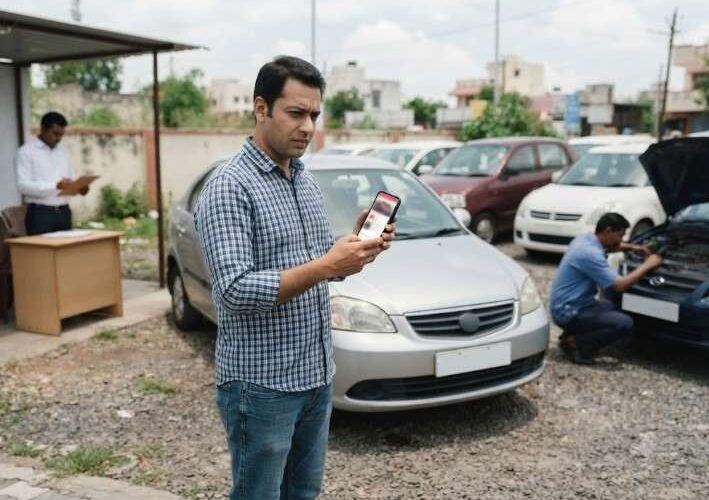
A bad listing usually shows a price far below the market, few or copied photos, a vague description, a seller who avoids meeting or asks for money before you have seen the car, and details that disagree with the registration record. Check the listing against VAHAN, see the car in person and pay only after verification.
Why do listings deserve suspicion?
A listing is an advertisement written by the seller. Most used car sales in India run through informal channels, and CRISIL puts the organised share at 26%, so most listings carry no independent check. First-time buyers make up nearly two-thirds of purchases in the same report, and they are the group least able to spot a false claim.
A June 2026 guide to second-hand car scams in Delhi NCR puts fake online listings first among common scams and describes “single-owner”, “accident-free” and “low-mileage” claims that buyers accept without checking.
Which red flags show up in the listing itself?
| Red flag | Why it matters | What to check |
|---|---|---|
| Price far below similar cars | Can signal accident concealment, mechanical neglect, loan distress, disputed ownership or a fake ad | Compare with similar listings on several platforms |
| One or two blurry photos, or stock images | Scammers often reuse photos from genuine listings | Run a reverse image search on the photos |
| Vague description with mismatched details | The seller may not own the car | Ask for the registration number and check it on VAHAN |
| Same car listed under several sellers | A duplicate listing is a fraud indicator | Search the photos and registration number |
| Claims such as “single owner” or “accident-free” with no proof | Buyers often accept them unchecked | Ask for the RC, service records and an inspection report |
Reviewed on 14 October 2026. Scam patterns and platform features change, so verify current details before you pay.
Per CarArth’s guide to 15 red flags, inconsistency is the common thread: inconsistent kilometres, service history, ownership claims and pricing. It also lists fake urgency and duplicate listings, with reverse image search as the check.
Which red flags show up in the seller’s behaviour?
- Refuses to meet or show the car in person. Hooter lists this among its warning signs for fake listings.
- Asks for a booking amount before inspection. The same guide flags requests for money before you have seen the car.
- Pushes you to act fast. Urgency leaves less time to verify.
- Asks you to use an unfamiliar service. CARFAX Europe warns about deposit requests through untraceable channels and links to fake “intermediation” or report sites that imitate known brands.
- Refuses to share paperwork or history. A seller who will not show the RC or service records has told you what you need to know.
Which red flags show up in the paperwork?
Run the registration number through the VAHAN national register portal, which typically shows the registration date, RTO, insurance and fitness validity. Then compare it with the listing and the RC copy.
| Mismatch | Possible meaning |
|---|---|
| Registration year or RTO differs from the listing | Wrong car, or a cloned listing |
| Owner name differs from the seller’s | The seller may not have the right to sell |
| Hypothecation entry on the record | A loan may still be open |
| Insurance expired | The car may have been off the road, or unclaimed |
| Chassis or engine number differs from the RC | A serious document problem |
Cars24 reports that 20% of used cars inspected in its data show signs of odometer tampering (April 2026). That comes from cars already sent for inspection, so read it as a signal about risk. A listing that quotes low mileage on an older car deserves a check of service records and insurance history.
How does a verified listing look different?
Verified inventory shows what it checked and transparently brings out both the good, bad and the ugly of every pre-owned car. Per the published terms of the organised used car platform Cars24, for instance, private seller listings on the platform come with high-quality images and detailed descriptions, and offer an option to buy an inspection report. Its owned stock (platform-owned) inventory carries a 300-point inspection, and as per the platform’s inspection report information, the report lists every imperfection with unedited images.
A verified label helps only when the terms behind it are written down. Ask which checks were done, by whom and when, and whether the listing is owned stock or a seller’s car.
What should you do before you pay?
- See the car in person, in daylight.
- Run the registration on VAHAN and compare it with the listing and the RC.
- Search the photos for duplicates.
- Ask for the inspection report, or book an independent inspection.
- Compare the price with similar cars on several platforms.
- Pay only after the paperwork checks out, and use a traceable method.
- Keep every message and receipt.
Caveats: when does a flag mean less?
- A low price can have an honest reason: A seller who needs to move quickly may price low. The check is to verify the car, and a flag is a cue to check.
- A missing report on a private sale is common: Book an inspection and treat the price as the trade-off.
- A dealer’s listing can have thin photos: Ask for a video call or a visit.
- A clean VAHAN result confirms the record: Inspect the car as well, since the record says little about its condition.
What if you already paid a scammer?
Report it at once. The National Consumer Helpline’s contact page lists 1930 for cyber financial fraud and 1915 for consumer complaints, and the official National Consumer Helpline site lists 1915 (8 AM to 8 PM) and WhatsApp +91 88000 01915. Keep payment records, screenshots and the seller’s number.
Rules to remember
- Compare the price with the market before you fall for it.
- Match the listing to VAHAN and the RC.
- Search the photos for duplicates.
- Pay only after you have seen the car and checked the paperwork.
FAQ
How do I know if a used car listing is fake?
Look for a price far below similar cars, few or copied photos, a vague description, a seller who avoids meeting, and a request for a booking amount before inspection. Search the photos for duplicates and check the registration on VAHAN.
Why are some used cars listed so cheap?
Very low prices can signal accident concealment, mechanical neglect, loan distress, disputed ownership or a fake ad. Compare with similar listings and verify the car before you negotiate.
Should I pay a booking amount before seeing a used car?
No. Pay only after you have seen the car, checked the paperwork and confirmed the seller’s identity. Requests for advance payment through untraceable channels are a common scam pattern.
How can I check a used car’s registration details?
Run the registration number through the VAHAN national register portal. It typically shows the registration date, RTO, insurance and fitness validity. Compare the result with the RC copy the seller gives you.
Are platform-verified listings safer?
They give you more to check. Cars24’s owned stock carries a 300-point inspection and a published report, and its seller listings offer a report for purchase. Confirm which type your listing is.
Where do I report a used car scam?
Call 1930 for cyber financial fraud, and register consumer complaints with the National Consumer Helpline on 1915. Keep payment records, screenshots and the seller’s details.
Reference:
https://www.carbike360.com/news/indias-organised-used-car-market-to-exceed-7-million-units-by-fy27-crisil-report
https://hooter.in/blog/common-scams-in-the-second-hand-car-market-and-how-to-avoid-them/
https://cararth.com/throttle-talk/guide/15-red-flags-watch-buying-used-car-india-2026
https://www.carfax.eu/press/used-car-scams-the-new-red-flags-according-to-carfax
https://vahan.parivahan.gov.in/nrservices/
https://www.cars24.com/article/odometer-tampering-how-20-of-used-cars-are-misrepresented/
https://www.cars24.com/why-cars24/buy-used-cars/
https://www.cars24.com/article/cars24-assured-quality-used-cars-you-can-count-on/
https://www.cars24.com/article/what-cars24-300-point-inspection-report-includes/
https://complainthub.org/national-consumer-helpline-nch/
https://consumerhelpline.gov.in/public/about