The Ford Mustang: Sports Car, Pony Car, or Something Entirely Its Own?
September 28, 2026
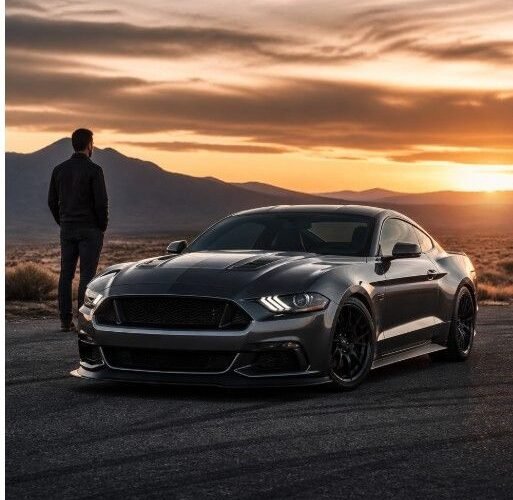
Few automobiles in American history have sparked as much debate about identity as the Ford Mustang. Since its debut in 1964, enthusiasts, journalists, and automakers alike have wrestled with a deceptively simple question: what exactly is the Mustang? Is it a muscle car? A sports car? A pony car? The answer, it turns out, is more nuanced than any single label can contain — and that ambiguity is precisely what has made the Mustang one of the most enduring nameplates in automotive history.
A Classification Debate That Has Lasted Six Decades
The Mustang was never designed to fit neatly into a predefined category. When Ford introduced it to the world at the 1964 New York World’s Fair, it was marketed as an affordable, stylish, and versatile vehicle that could appeal to a broad demographic — young buyers, families, performance seekers, and everyday commuters. It was priced accessibly, offered a wide range of configurations, and was built on a compact platform derived from the Falcon. That origin story alone separates it from the traditional muscle car formula, which typically involved a large-displacement V8 dropped into a mid-size body for straight-line dominance.
The Mustang, by contrast, was something more democratic. It could be ordered as a mild-mannered six-cylinder cruiser or a fire-breathing performance machine. That flexibility was intentional, and it gave birth to an entirely new automotive segment — the pony car — a class defined by long hoods, short rear decks, sporty styling, and attainable pricing. Competitors like the Chevrolet Camaro and Pontiac Firebird followed in its wake, but the Mustang had already claimed the territory.
Why the Muscle Car Label Doesn’t Quite Fit
The distinction between a pony car and a muscle car is more than semantic. Muscle cars — think the Chevelle SS, the Dodge Charger, or the Plymouth Road Runner — were fundamentally about raw, uncompromising power delivered through large-displacement engines in relatively heavy bodies. Performance was the primary purpose, and subtlety was rarely part of the equation. As Car Throttle explains in their detailed breakdown of why the Mustang isn’t technically a muscle car, the Mustang’s platform, origins, and design philosophy place it firmly outside that category, despite the cultural overlap that decades of marketing have created.
This distinction matters not just for trivia purposes but for understanding why the Mustang has survived and thrived while many of its contemporaries faded. Its identity was never locked into a single performance formula. It could evolve, adapt, and reinvent itself across generations without betraying its core character.
The Birth of an Icon: Looking Back at 1964
To truly understand what the Mustang is, you have to return to its origins. The story of how Ford conceived, developed, and launched the Mustang in the early 1960s is one of the most compelling product development narratives in American industrial history. Lee Iacocca’s vision, the internal battles at Ford, the rapid prototyping, and the unprecedented public response — all of it shaped a vehicle that was as much a cultural statement as an engineering achievement. Looking back at the birth of the Mustang across six decades reveals just how deliberately Ford crafted something that defied easy categorization from the very beginning.
The original Mustang sold over one million units in its first two years — a record that stunned the industry. It wasn’t because buyers were all performance fanatics. It was because the car offered something for nearly everyone. That broad appeal, rooted in smart design and strategic positioning, is the foundation upon which the Mustang’s legacy was built.
Evolution Across Generations
The Mustang has undergone dramatic transformations since 1964. The bloated, emissions-strangled versions of the mid-1970s nearly killed the nameplate’s performance reputation. The Fox-body era of the 1980s revived it with a leaner, more modern platform. The SN-95 and New Edge generations of the 1990s and early 2000s refined the formula further. Then came the landmark 2005 retro-styled redesign, which reconnected the Mustang with its visual heritage while delivering genuinely modern performance. Each generation reflected the era in which it was built, yet the Mustang always retained its essential character — accessible, stylish, and capable of genuine excitement when properly equipped.
Revology Cars: Honoring the Classic Mustang Through Meticulous Restoration
For those who believe the earliest Mustangs represent the purest expression of the nameplate’s identity, there is a company dedicated to preserving and perfecting that era with extraordinary attention to detail. Revology Cars specializes in factory-correct, turnkey reproductions of classic 1960s Ford Mustangs and other iconic Ford models, built to exacting standards using modern engineering and premium components. Their vehicles capture the visual and emotional essence of the original pony car while delivering the reliability and drivability that modern owners expect. It is a rare combination — the soul of a 1965 or 1966 Mustang with the confidence of a vehicle built to contemporary quality standards.
What Revology has accomplished is not simply restoration in the traditional sense. Their approach involves building vehicles from the ground up, using period-correct styling cues alongside carefully selected modern mechanical upgrades. The result is a Mustang that feels authentic without the compromises that come with aging original components. For collectors, enthusiasts, and drivers who want to experience the golden age of the pony car without sacrificing dependability, it represents a compelling and thoughtfully executed option.
Why the Classic Era Still Resonates
There is something about the proportions, the simplicity, and the character of the early Mustangs that modern vehicles — however capable — struggle to replicate. The long hood, the fastback roofline, the chrome details, and the analog driving experience connect the driver to the road in a way that contemporary technology often filters out. For many enthusiasts, the 1964-and-a-half through 1968 Mustangs represent the model at its most honest and most beautiful. That sentiment has only grown stronger as those vehicles have become rarer and more valuable.
A Legacy That Transcends Labels
Ultimately, the debate over whether the Mustang is a muscle car, a sports car, or a pony car may be less important than what the vehicle actually represents: a uniquely American idea about freedom, individuality, and the open road. No other nameplate has managed to remain culturally relevant across six decades while continuously reinventing itself. The Mustang has appeared in films, music, and popular culture so frequently that it has become a symbol rather than merely a product.
Whether you encounter one in its original 1960s form, a meticulously crafted modern reproduction, or the latest factory offering, the Mustang communicates something immediate and unmistakable. It is a car that invites participation — in its history, in its community, and in the ongoing conversation about what makes an automobile truly iconic. That conversation, it seems, is far from over.