How to Jump Start a Car: Step-by-Step Guide for Beginners
October 18, 2026
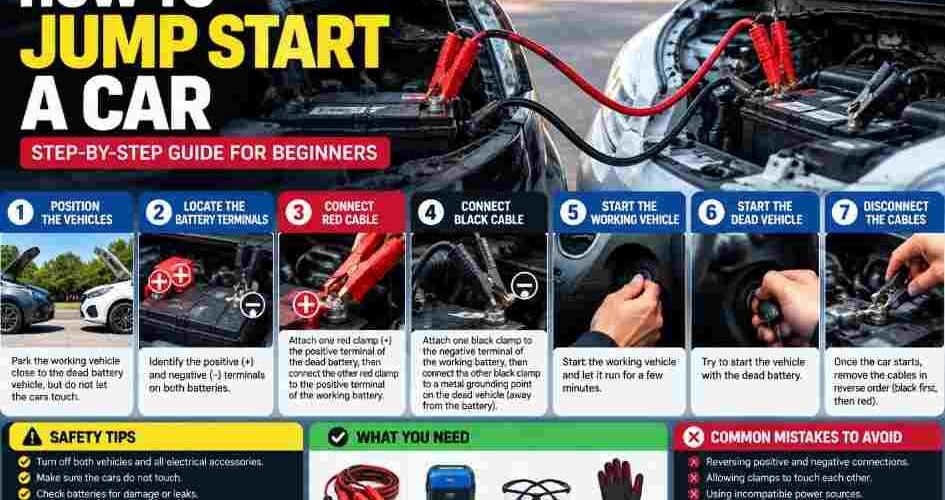
A car battery can leave you stranded at home in a parking lot or on the roadside. Fortunately a jump start a car can often help restart a vehicle with a discharged 12-volt battery.
Learning how to jump start a car is a skill for drivers. However connecting jumper cables incorrectly can damage components cause sparks or create serious safety risks.
This guide explains the equipment needed, safe cable connections, common mistakes and what to do after your vehicle starts.
What Is Jump Starting a Car?
Jump starting is a method of supplying electrical power to a vehicle with a discharged battery.
A working vehicle battery or a compatible portable jump starter provides energy to help the disabled vehicle start.
Once the engine is running the vehicles charging system may recharge the battery.
However jump starting will not repair a damaged battery, faulty alternator or other mechanical problem.
What You Need Before Jump Starting
Before attempting a jump start gather the equipment.
| Equipment | Purpose |
|---|---|
| Jumper cables | Transfer electrical power between batteries |
| Working vehicle | Provides power for starting |
| Portable jump starter | Alternative to another vehicle |
| Safety glasses | Help protect your eyes |
| Protective gloves | Provide additional hand protection |
| Owners manual | Identifies approved connection points and procedures |
Most conventional passenger vehicles use 12-volt systems but not all vehicles follow the same procedures.
Always consult the owners manual before connecting cables for hybrid, electric or newer vehicles with dedicated jump‑start terminals.
Safety Precautions Before You Begin
Battery safety should always come first.
- Park both vehicles on ground.
- Apply the parking brakes.
- Turn off engines and electrical accessories.
- Keep the vehicles from touching.
- Check batteries for visible damage or leaks.
- Keep flames and cigarettes away from batteries.
- Remove loose jewelry near electrical connections.
- Never attempt to jump‑start a frozen, swollen, leaking or visibly damaged battery.
If the vehicle uses a high‑voltage hybrid or electric system follow its instructions. Never connect jumper cables to high‑voltage components.
How to Jump Start a Car: Step-by-Step Instructions
Step 1: Position the Vehicles
Park the working vehicle close enough for the jumper cables to reach both approved connection points.
Ensure the vehicles do not touch.
Turn off both engines. Switch off accessories such as headlights, air conditioning and audio systems.
Step 2: Locate the Battery Terminals
Identify the +) and negative (−) terminals.
The positive terminal is often marked with a plus symbol. Covered by a red cap.
Some vehicles have designated jump‑start terminals away from the battery.
Use the connection points specified in the vehicles manual.
Step 3: Connect the Red Cable
Attach one clamp to the positive terminal of the discharged battery.
Connect the red clamp to the positive terminal of the working battery.
Make sure the clamps are secure.
Step 4: Connect the Black Cable
Attach one clamp to the negative terminal of the working battery.
Connect the remaining clamp to the approved grounding point on the disabled vehicle away, from its battery.
Use the manufacturer‑designated ground point whenever
Never allow the cable clamps to touch each other while connected.
Step 5: Start the Working Vehicle
Start the working vehicle. Allow it to run according to the manufacturers recommended procedure. Jump start a car requires attention.
Some vehicles prohibit using their systems to jump‑start another vehicle so check the donor vehicles manual first.
Step 6: Start the Disabled Vehicle
Attempt to start the vehicle with the discharged battery. Jump start a car by cranking the engine.
Avoid cranking. Follow the owners manual for starting intervals and waiting periods.
If the engine does not start after an attempts stop and seek professional assistance.
Step 7: Disconnect the Cables Safely
Once the disabled vehicle starts remove the jumper cables in order: After a successful jump start a car disconnect the cables correctly.
- Remove the clamp from the disabled vehicles grounding point.
- Take the clamp off the working battery.
- Take the clamp off the working battery.
- Take the clamp off the battery that was discharged before.
Keep the clamps apart while taking them off.
What to Do After Jump Starting
After jump start’s successful do not turn the engine off right away unless the maker says the jump start is okay.
A long drive can help refill a battery but driving time alone does not promise a full charge.
If the battery was deeply discharged you may need a battery charger.
Get the battery and charging system tested, especially if the problem comes up again.
Common Jump-Starting Mistakes
Drivers should avoid common errors:
- Switching the positive and negative connections.
- Using a power source that does not match.
- Connecting cables without looking at the owner’s manual.
- Letting the clamps touch each other.
- Trying to jump start a car with a damaged battery.
- Continuing to try to jump start when the engine will not start.
- Ignoring battery problems that keep happening.
Wrong connections can cause damage or hurt a person.
Frequently Asked Questions
1. How Long Does It Take to Jump Start a Car?
The connection and jump start process may take a minutes depending on the battery and the car.
2. Can You Jump Start a Car in the Rain?
Light rain does not always stop a jump start. Avoid unsafe weather, standing water, broken gear and bad conditions.
3. Can a Dead Battery Be Jump Started?
Some discharged batteries may jump start but damaged batteries may need to be replaced.
4. Can Jump Starting Damage a Vehicle?
Yes. Wrong connections, mismatched systems or not following the maker’s instructions can damage the car’s electrical parts.
5. Why Won’t My Car Start After a Jump?
Possible reasons are a battery, bad cable connections, starter trouble charging system faults or other mechanical problems.
Conclusion
Knowing how to jump start a car can help drivers handle a roadside problem with more confidence.
The important steps are checking the battery using equipment that works following the right connection order and obeying the maker’s instructions.
If the vehicle keeps needing jump starts get a battery and charging system check instead of using quick fixes.