How to Drive a Manual Car: A Complete Beginners Guide
October 18, 2026
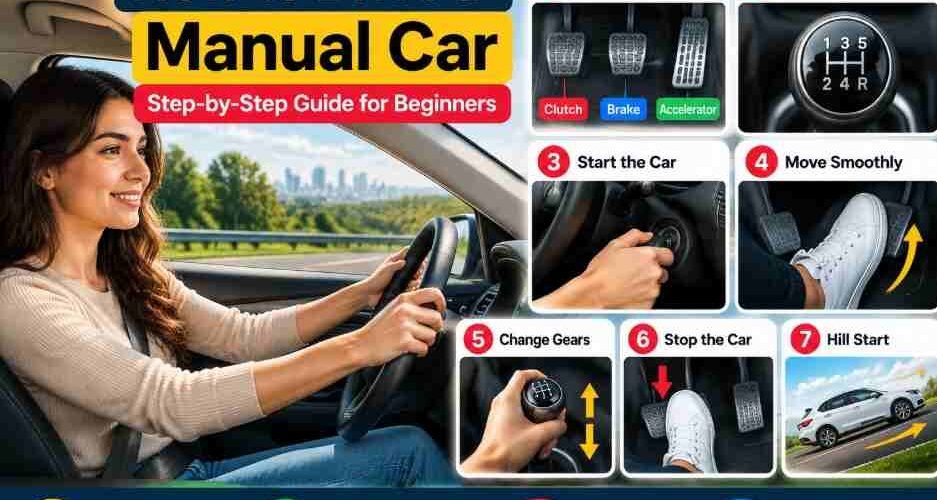
Learning to operate a stick-shift vehicle can feel challenging when you are new to driving. Unlike a car a manual car needs you to coordinate the clutch, accelerator, brake and gear shifter. However with instruction and steady practice these skills become easier to manage.
Understanding how to drive a car begins with learning the controls and developing smooth clutch movements. Whether you are preparing for your driving lesson or want to boost confidence this guide explains the essential techniques for beginners in the United States.
1. Understand the Controls of a Manual Car
Before starting the engine familiarize yourself with the cars controls. Most manual cars have three pedals arranged from left to right.
- Clutch: Disconnects the engine from the transmission during gear changes.
- Brake: Slows down. Stops the vehicle.
- Accelerator: Controls engine power.
- Gear shifter: Selects the driving gear.
- Parking brake: Helps keep the vehicle stationary.
In a left-hand-drive manual car your left foot operates the clutch. Your right foot controls the brake and accelerator.
Adjust your seat and mirrors before riding. Fasten your seat belt. Ensure you can press every pedal comfortably without stretching.
2. Learn the Gear Positions
Manual cars commonly have five or six gears, neutral and reverse. The exact arrangement depends on the car.
| Gear | Typical Purpose |
|---|---|
| First | Starting from a stop |
| Second | Low-speed driving |
| Third | Moderate acceleration |
| Fourth | Higher-speed driving |
| Fifth or Sixth | Cruising when appropriate |
| Neutral | No driving gear engaged |
| Reverse | Moving backward when |
These are general guidelines, not fixed speed recommendations. Always follow the car manufacturers instructions and adjust your gear selection to the road and driving conditions.
Practice identifying each gear while the manual car is stationary and the engine is off.
3. Start the Engine Safely
Before moving make sure the parking brake is engaged and the gear shifter is in neutral.
Follow these steps:
- Adjust your seat, mirrors and steering wheel.
- Fasten your seat belt.
- Press the clutch fully if required by the car.
- Start the engine according to the owners manual.
- Keep the clutch pressed and select gear.
- Check your mirrors, spots and surroundings before moving.
Some manual cars require the clutch to be pressed before the engine will start. Others have starting procedures.
Beginners should practice in a permitted area with a qualified instructor or appropriately experienced supervisor.
4. Master Clutch Control
Clutch control is one of the important skills for beginners. The clutch engagement point, sometimes called the biting point is where the cars clutch begins transferring engine power to the transmission.
To move forward smoothly:
- Press the cars clutch fully and select first gear.
- Slowly release the clutch until you feel the manual car begin to pull.
- Pause briefly at the engagement point.
- Apply accelerator input as needed.
- Continue releasing the clutch while the manual car moves.
Releasing the clutch quickly can stall the manual cars engine. Applying much accelerator may cause unnecessary engine revving.
Avoid keeping the clutch engaged for longer, than necessary because excessive slipping creates heat and can accelerate wear.
5. Change Gears While Driving
Once the manual car is moving you must select gears as speed and engine load change.
When shifting to a gear:
- Release the accelerator.
- Press the cars clutch fully.
- Move the shifter into the gear.
- Release the clutch smoothly.
- Apply the accelerator as needed.
Do not stare at the gear shifter while driving. Learn the gear pattern while parked so you can change gears without taking your eyes off the road.
There is no one speed at which every manual car should change gears. The correct timing depends on the engine, vehicle design, road slope and driving conditions.
6. Stop a Manual Car Without Stalling
Stopping requires coordination between the brake and clutch.
When approaching a stop:
- Release the accelerator.
- Apply the brake smoothly.
- As the manual car slows toward the point where the engine may struggle press the clutch fully.
- Bring the car to a complete stop.
- Select neutral if manual car will be waiting and use the parking brake when appropriate.
Manual car does not need to press the clutch every time it brakes. At speeds manual car can brake while the clutch remains engaged. Press the clutch before the engine begins to lug or stall.
7. Start on a Hill With Confidence
A manual car can roll backward on a slope if the brakes are released early. Hill starts require practice and careful timing.
Use the parking brake or the vehicles hill-start assist feature where available.
- Secure the car while stationary.
- Select first gear with the clutch pressed.
- Find the clutch engagement point.
- Apply accelerator input.
- Release the parking brake when manual car is ready to move
- Release the clutch smoothly while maintaining control.
Practice on a slope with an instructor. Never rely on holding the car stationary using the clutch alone as this can cause unnecessary wear.
8. Common Mistakes to Avoid
Beginners often improve faster when they recognize errors early.
- Releasing the clutch suddenly.
- Applying excessive accelerator input.
- Resting a foot on the clutch while driving.
- Looking down during gear changes.
- Selecting a gear for the speed.
- Holding the car on a hill using excessive clutch slip.
- Allowing frustration to distract car after stalling.
If the engine stalls, remain calm secure the car and restart when it is safe.
9. Practice Safely in the United States
Before driving on roads check your states learner permit and supervision requirements. These rules vary by jurisdiction.
Practice the basics before attempting intersections or highway driving.
Focus on these skills:
- Smooth. Stops.
- Controlled gear changes.
- Safe. Intersections.
- Maintaining a following distance.
- Starting on slopes.
- Responding calmly to unexpected situations.
Never practice on roads without the required legal authorization and supervision.
Frequently Asked Questions
Is learning a manual car difficult?
It can be challenging at first because several controls must work together. Practice and professional instruction help develop coordination.
How long does it take to learn?
Learning time varies depending on practice, instruction and individual progress. Focus on repeatable control rather than rushing to drive independently.
Why does a manual car stall?
Stalling commonly occurs when the clutch is released quickly the engine receives insufficient power or the selected gear is unsuitable, for the situation.
Conclusion
Understanding How to Drive a Manual Car takes patience, practice and attention to safety. Begin by learning the pedals and gear positions develop clutch control, smooth shifting and reliable stopping techniques.
Build your skills gradually in a legal practice environment. With guidance and consistent practice you can develop the control and confidence needed to operate a manual transmission responsibly.
How European Car Technology Changes the Way Vehicles Are Serviced
[…] How to Drive a Manual Car: A Complete Beginners Guide […]