Moving to a New City? Your Old Challans Came With You
September 30, 2026
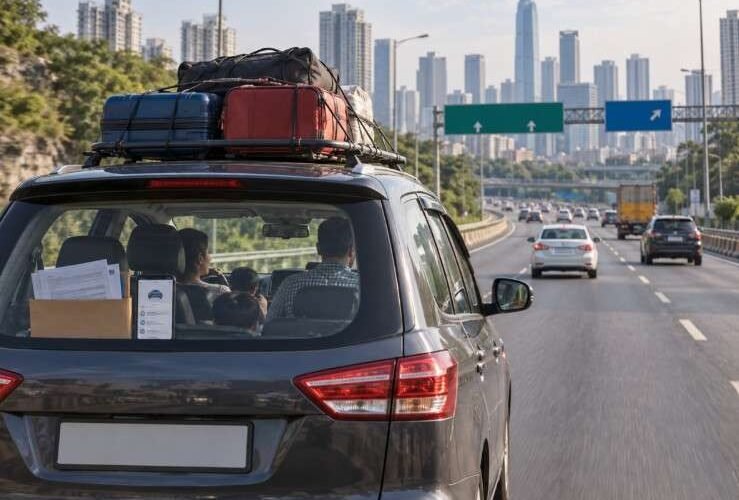
Relocating to a new city comes with a long list of things to sort out. Change of address, new route to figure out, new traffic patterns to learn. What most people do not add to that list is checking whether their vehicle is carrying unpaid traffic challans from the city they just left. That oversight tends to resurface at the worst possible time, usually months after the move, in a context that has nothing to do with traffic fines.
Challans do not care about postcodes. They are attached to your vehicle’s registration number, and that number travels with you wherever you go.
Challans Do Not Have a Postcode
When a traffic challan is issued, it is recorded against your vehicle’s registration number in a centralised government database. The Parivahan system, which links traffic enforcement records across India, means that a fine issued in Bengaluru in January is just as visible to an RTO in Delhi in December as it was on the day it was issued. There is no geographical boundary that limits where a challan can be seen or enforced.
This is a relatively recent development in practical terms. The integration of state traffic databases with the central system has been deepening steadily, and what was once a patchwork of disconnected records is now an increasingly unified picture. A vehicle that accumulated challans in one city and then moved to another cannot outrun its record simply by changing location.
The registration number is the identifier, and it follows the vehicle. As long as you are driving the same car, everything that happened to that car’s record in your previous city is part of what any traffic system in your new city can see.
The Violations Most Likely to Follow You
Not all challans are equally likely to have been noticed and cleared before a move. Some categories of violations surface frequently in post-relocation challan checks precisely because they tend to go unnoticed in the first place.
- Speed camera violations on expressways and national highways, which are often captured without any interaction with a traffic officer and generate e-challans that rely entirely on SMS notification for the driver to know they exist.
- Red light camera challans in high-density traffic zones, particularly in cities with extensive camera networks, where the volume of violations means individual notifications can be delayed by days or weeks after the event.
- Challans issued during festive travel periods, when many people drive to other cities for short visits and pass through unfamiliar camera zones without realising they have committed a recordable violation.
- Parking challans in cities that issue them digitally rather than as physical notices on the vehicle, which a driver may never have seen if they returned to find their car unattended.
Any challan in this category that was never paid before the move is now a pending fine in a new context, and the payment window may have already closed.
What Happens When Challans From Another State Surface
The moment a challan in your previous city’s records crosses its payment deadline without being settled, it becomes eligible for court referral. If that referral has already happened before your move, you may now have an active court case in a city you no longer live in.
This creates a practical problem beyond just the fine amount. A court challan requires resolution through the court that issued it. Virtual court facilities exist in some states that allow certain categories of traffic cases to be compounded and paid online without a physical appearance, but this is not uniformly available across all states or for all violation types. For cases that require a physical hearing, you are looking at either travel back to the original city or legal representation there, neither of which is a convenient or cheap option.
Discovering this situation early, before the court referral has happened, means you can still clear the challan through a straightforward online payment. Discovering it after the referral has already occurred narrows your options considerably.
How a New City’s Traffic System Sees Your Record
When you start driving in a new city, your vehicle enters the local traffic enforcement network with whatever record it already carries. ANPR cameras at entry points to many major cities scan passing vehicles and flag those with outstanding challans or other compliance issues. A vehicle that triggers this flag may be stopped at a check post, not because of anything you did on that road, but because of something that happened months ago in a city you no longer live in.
Similarly, if you are stopped by a traffic officer in your new city for any reason, a routine check of your registration number will surface any pending challans from anywhere in the country. What might have been a simple interaction becomes a more complicated one if the officer’s screen shows multiple outstanding fines from another state.
Your new city’s traffic system does not distinguish between fines issued there and fines issued elsewhere. It sees the full picture attached to your registration number.
Clearing the Slate Before You Settle In
The most practical approach is to run a comprehensive challan check before or immediately after a relocation, while you still have full context of where you drove and when. Enter your registration number into Cars24’s challan portal and the system pulls verified data from traffic databases across all Indian states, showing every pending fine linked to your vehicle regardless of which state or authority issued it.
Review each challan for accuracy. If everything looks correct, pay the outstanding ones through the portal immediately. Online challans that are still within their payment window settle within 72 hours of payment. For anything showing a court-pending status, the portal will make that clear so you know which fines need a different resolution path.
Do this before the practical complications of a new city add friction to what is already an administrative task most people would rather not deal with. A challan check takes two minutes. Sorting out a court referral in another city takes considerably longer.
Start Fresh, Actually
Moving cities is a natural moment to close out loose ends. The challans you accumulated during your time in your previous city are a loose end with a legal dimension, and they do not resolve themselves simply because you have moved on.
A clean challan record as you settle into a new city means no unexpected stops at check posts, no complications at the RTO when you update your address on your registration, and no surprises when you renew your insurance. It means the only traffic fines you will ever have to deal with in your new city are the ones you incur there, which is exactly how it should be.